

What Do the Symbols on a Fire Extinguisher Indicate? A Complete Guide
Fire extinguishers are among the most underappreciated pieces of safety equipment found in homes, offices, factories, and public buildings. Most people walk past them every day without a second glance, yet in an emergency, the small pictograms printed on their labels can mean the difference between safely putting out a fire and making a dangerous situation far worse. If you have ever paused in front of one of these red cylinders and wondered, “what do the symbols on a fire extinguisher indicate?”, you are not alone. This question is far more common than people realize, because fire safety labeling is often assumed rather than actually taught. This article offers a deep, practical, and easy-to-understand breakdown of everything you need to know about these symbols, why they exist, how they evolved, and why understanding them is a genuine life-saving skill.
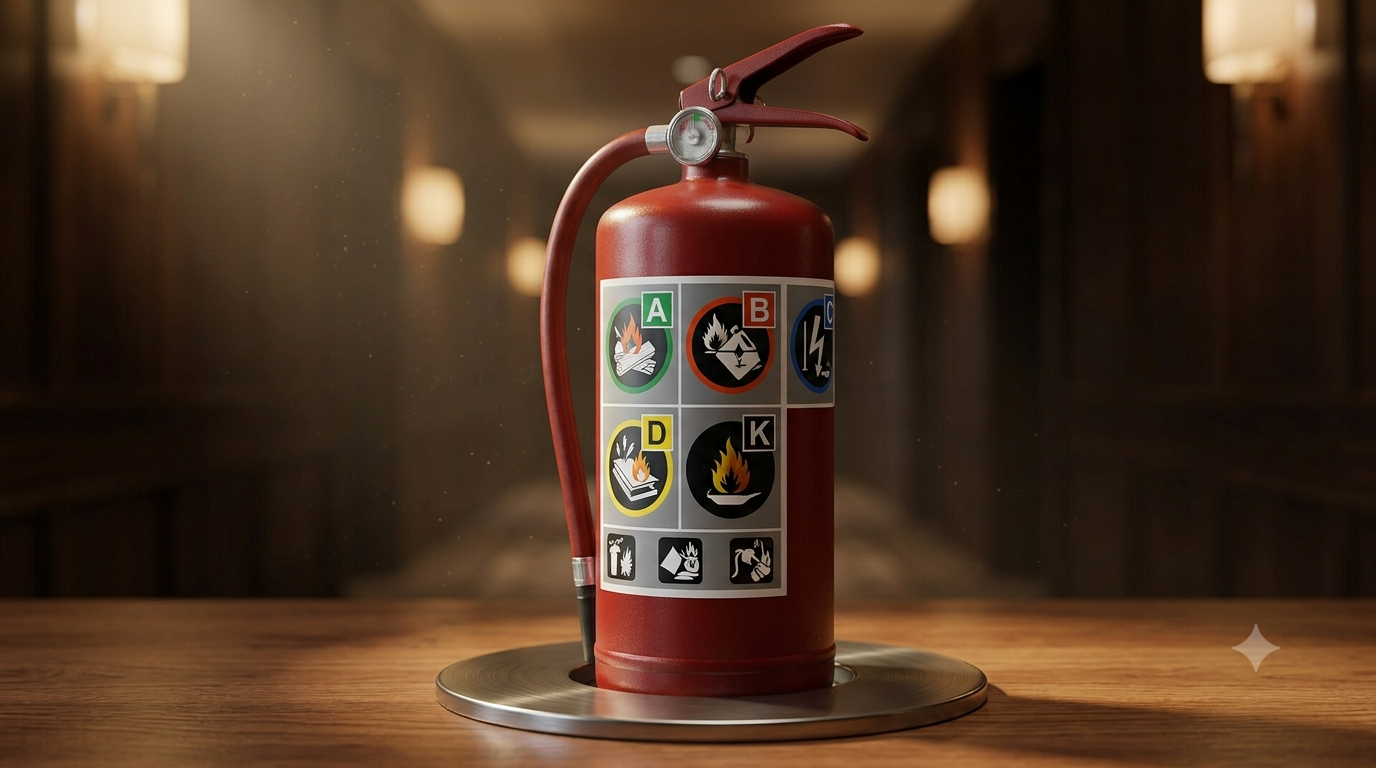
Understanding Fire Extinguisher Symbols: An Overview
Every fire extinguisher sold today, whether in a small retail shop or a large industrial facility, carries a label packed with information. At first glance, this label can look cluttered or overly technical, filled with letters, geometric shapes, colored bands, and small pictures. But each element has a specific purpose. When people ask what do the symbols on a fire extinguisher indicate, they are really asking about a compact visual language designed to communicate, in seconds, which types of fires a particular extinguisher can safely handle and which types it absolutely cannot.
This visual language exists because fires are not all the same. A fire caused by burning wood or paper behaves very differently from a fire caused by a grease pan on a stove, which behaves differently again from a fire involving live electrical wiring. Using the wrong extinguishing agent on the wrong fire type can cause the flames to spread, cause an explosion, or create a severe electrocution hazard. The symbols on the extinguisher label are essentially a safety shorthand, allowing anyone, regardless of technical training, to make a fast and correct decision during a stressful, time-sensitive event.
The History and Evolution of Fire Extinguisher Labeling
To fully appreciate what do the symbols on a fire extinguisher indicate, it helps to understand how this labeling system came into being. Early fire extinguishers, dating back to the 19th and early 20th centuries, had almost no standardized labeling at all. Users were expected to simply know how the device worked, and there was little distinction made between different classes of fire. As industrialization spread and fires in factories, ships, and growing urban centers became more complex and more frequent, safety organizations recognized the urgent need for a universal system.
By the mid-20th century, national fire safety bodies in the United States, the United Kingdom, and parts of Europe began developing classification systems for fires based on the fuel source involved. Organizations such as the National Fire Protection Association in the United States played a central role in shaping this policy framework, eventually leading to the letter-based classification system many countries still use today. Later, international standards bodies such as the International Organization for Standardization introduced pictogram-based labeling to overcome language barriers, since a picture of a burning log or a flame over an electrical outlet can be understood instantly by someone who may not read the local language fluently. This shift from text-heavy labels to universally recognizable icons was a major turning point, and it remains the backbone of how manufacturers design labels today.
Why Standardized Symbols Matter: The Core Objectives
The objective behind these symbols is straightforward but critical: to reduce confusion and response time during a fire emergency. A few key goals shaped the design of modern extinguisher labeling.
First, the system needed to be understandable at a glance, since people rarely have time to read a paragraph of instructions while a fire is spreading. Second, it needed to work across literacy levels and language barriers, which is why pictograms are used alongside, or sometimes instead of, written class letters. Third, the labeling needed to prevent dangerous misuse, particularly around electrical fires and flammable liquid fires, where using water or the wrong agent can actually intensify the danger. Finally, regulators wanted consistency across manufacturers and across borders, so that a person trained on fire safety in one country could still recognize extinguisher types in another. Together, these objectives explain why, when someone asks what do the symbols on a fire extinguisher indicate, the honest answer is that they indicate a carefully engineered safety communication system, not just decorative branding.
Breaking Down the Fire Classes and Their Symbols
The heart of any extinguisher label is the fire class system. Fires are grouped into categories based on the material that is burning, and each category has its own letter and pictogram.
Class A fires involve ordinary combustible materials such as wood, paper, cloth, and many plastics. The symbol for this class is typically a triangle, often colored green, containing the letter A alongside an image of flames over a stack of burning material like logs or paper. Extinguishers rated for Class A fires usually work through cooling and smothering, most commonly using water-based or foam agents.
Class B fires involve flammable liquids and gases, such as petrol, oil, paint thinner, and similar substances. The symbol is generally a square, often colored red, showing the letter B alongside an image of flames over a liquid pool or a fuel can. Because water can cause flammable liquids to splash and spread fire rather than extinguish it, Class B extinguishers typically use foam, dry chemical powder, or carbon dioxide instead.
Class C fires involve energized electrical equipment, including wiring, circuit breakers, and machinery that is still connected to a power source. This symbol is usually a blue circle showing the letter C with an image of a spark or an electrical plug and flame. Water must never be used on this type of fire due to the serious risk of electric shock, which is why extinguishers rated for Class C use non-conductive agents such as carbon dioxide or dry chemical powder.
Class D fires involve combustible metals such as magnesium, titanium, and sodium, most commonly found in industrial and laboratory settings. The symbol is typically a yellow star or hexagon marked with the letter D. These fires require specialized dry powder agents designed specifically for metal fires, since standard extinguishing agents can react violently with burning metal.
Class K, sometimes labeled Class F in parts of Europe and the UK, involves cooking oils and fats, commonly seen in commercial kitchens. The symbol usually appears as a black hexagon with the letter K, often depicting a frying pan with flames. These fires require wet chemical agents that create a soapy, cooling barrier over the burning oil, a process known as saponification.
Understanding these six categories is really the foundation for answering what do the symbols on a fire extinguisher indicate, because every other design element on the label exists to support quick recognition of these classes.
The Color Coding System Explained
Beyond letters and pictograms, color plays a major supporting role in extinguisher labeling. While exact color conventions can vary slightly between regions and manufacturers, a broadly consistent pattern has emerged internationally. Water extinguishers are traditionally marked with a red band or red body. Foam extinguishers typically use a cream or beige color band. Dry powder extinguishers are usually marked in blue. Carbon dioxide extinguishers are marked in black. Wet chemical extinguishers, used for kitchen fires, are typically marked in a pale yellow or gold shade.
This color system allows a trained eye to identify the extinguishing agent inside the canister even from a distance, before ever reading the smaller pictogram details. It is a secondary layer of the same visual language, reinforcing the primary fire-class symbols rather than replacing them. Facilities managers, safety officers, and building inspectors rely heavily on this color coding when conducting routine safety audits, since it allows for rapid visual confirmation that the correct extinguisher type is mounted in the correct location.
How the Symbol System Is Implemented: Regulatory Standards and Manufacturing Practice
The implementation of extinguisher symbols is not left to the discretion of individual manufacturers. It follows a detailed regulatory framework enforced by national and international standards bodies. In the United States, the National Fire Protection Association’s NFPA 10 standard governs the classification, sizing, and placement of portable extinguishers, while agencies such as Underwriters Laboratories test and certify that labels accurately reflect the extinguisher’s capabilities. In Europe, the EN 3 standard governs extinguisher construction and labeling, while in many other countries, national bureaus of standards, such as the Bureau of Indian Standards in India, publish their own detailed specifications that manufacturers must follow before a product can be legally sold or installed in public buildings.
This layered regulatory approach ensures that when someone in one country looks at an extinguisher label, the core visual grammar, meaning the fire class letters, the pictogram style, and general color logic, remains recognizable even if exact regional variations exist. Manufacturers must submit their products for rigorous testing, including live-fire trials, before regulators approve the labeling, which is why the answer to what do the symbols on a fire extinguisher indicate is backed by decades of testing data rather than arbitrary design choices.
Reading the Pictograms: A Step-by-Step Breakdown
For someone encountering a fire extinguisher for the first time, it helps to know how to read the label methodically rather than trying to absorb everything at once. Start by locating the class letters, usually displayed prominently near the top of the label. These single letters immediately tell you the broad category of fire the extinguisher is designed for. Next, look at the pictograms directly beneath or beside the letters; these are small illustrated squares showing the type of fire, such as burning logs for Class A or a spark over a socket for Class C.
Pay close attention to any pictograms that are crossed out with a red diagonal line. This is one of the most important safety indicators on the entire label, because a crossed-out symbol means the extinguisher must never be used on that type of fire. For instance, a water extinguisher will almost always display a crossed-out electrical fire symbol, warning users that spraying water onto live electrical equipment can cause severe electric shock. Similarly, many extinguishers show a crossed-out flammable liquid symbol if they are not rated for Class B fires, since using the wrong agent on a fuel fire can cause it to spread rapidly. Recognizing these crossed-out warnings is arguably the single most critical part of understanding what do the symbols on a fire extinguisher indicate, because misreading them poses direct physical danger.
Finally, check the operating instructions, usually presented as a short sequence of numbered pictograms demonstrating how to pull the safety pin, aim at the base of the fire, squeeze the handle, and sweep side to side. This sequence is often remembered using the acronym PASS, standing for Pull, Aim, Squeeze, and Sweep, and it is deliberately illustrated rather than only described in text so that it can be understood instantly under pressure.
Regional Impact and Variations Across Countries
While the underlying logic of fire classification is broadly similar worldwide, there is meaningful regional impact in how symbols are displayed and enforced. In North America, the letter-based system (A, B, C, D, K) dominates, often paired with simple geometric shapes and color-coded bands. In the European Union and United Kingdom, the classification system is similar but includes Class F specifically for cooking oil fires, with slightly different pictogram artwork mandated under EN standards.
In parts of Asia, including India, China, and Southeast Asian nations, national standards bodies have adapted international pictogram guidance while adding local language text alongside the standard symbols, reflecting the practical policy framework needed in multilingual regions. This regional adaptation matters because public safety initiatives, building codes, and fire department training programs are all built around the specific labeling conventions used in that jurisdiction. A facility manager overseeing operations in multiple countries must therefore understand not just the universal fire classes, but also the regional nuances in how those classes are visually represented, ensuring that safety training and signage remain compliant with local regulatory expectations.
This is also where public safety awareness campaigns play a significant role. Fire departments, insurance companies, and workplace safety organizations frequently run community education programs specifically designed to teach residents and employees what do the symbols on a fire extinguisher indicate, recognizing that even a well-designed label is only effective if people take the time to learn how to interpret it before an emergency occurs.
Success Stories: How Symbol Literacy Has Prevented Disasters
There are countless documented incidents where correct identification of extinguisher symbols directly prevented a small fire from escalating into a major disaster. In commercial kitchens, staff trained to recognize Class K wet chemical extinguishers have been able to safely extinguish grease fires that would have flared dangerously if water had been used instead. In server rooms and data centers, IT staff trained to identify Class C-rated carbon dioxide extinguishers have safely handled electrical fires without the added risk of electrocution or equipment damage that water-based agents would have caused.
Industrial facilities that store magnesium or titanium components have avoided catastrophic explosions by ensuring only correctly labeled Class D extinguishers, using specialized dry powder, are kept near metal-working equipment, with staff specifically trained not to reach for standard extinguishers in those areas. These real-world outcomes highlight why regulatory bodies invest so heavily in symbol standardization: the labeling system is not a bureaucratic formality but a practical, tested tool that has repeatedly proven its value in emergency response.
Fire safety officers often cite these case studies during workplace training sessions precisely because they illustrate, in concrete terms, the value of teaching employees what do the symbols on a fire extinguisher indicate rather than assuming that instinct alone will guide the correct response during a crisis.
The Role of Symbols in Workplace Safety Programs and Social Welfare Initiatives
Beyond individual buildings, fire extinguisher symbol literacy has become an important component of broader occupational safety and social welfare initiatives. Many governments and labor safety agencies require employers to conduct regular fire safety training, and a core part of that training involves walking employees through extinguisher labels so that everyone in the workplace, regardless of role or department, can respond appropriately during an emergency.
This has tangible benefits for workplace culture and organizational risk management. Insurance providers frequently offer reduced premiums to businesses that can demonstrate robust fire safety training, including documented instruction on reading extinguisher symbols. Local governments, particularly in urban areas with dense commercial districts, have incorporated fire symbol education into broader public safety and disaster preparedness initiatives, recognizing that widespread understanding of basic fire safety tools reduces the burden on emergency services and improves overall community resilience. In this sense, understanding what do the symbols on a fire extinguisher indicate extends beyond individual self-protection and becomes part of a larger, collective approach to public safety.
Common Challenges in Standardization and Public Understanding
Despite decades of refinement, challenges remain in ensuring that fire extinguisher symbols are consistently understood by the general public. One persistent issue is that many people simply never receive formal training on reading these labels, relying instead on assumptions or incomplete memories from school fire drills. Another challenge is that older buildings sometimes still contain outdated extinguishers with faded, non-standardized, or even obsolete labeling, particularly in regions where enforcement of updated fire codes has been inconsistent.
There is also the challenge of visual clutter. Because manufacturers are legally required to include multiple types of information, class letters, pictograms, usage instructions, agent type, and sometimes multilingual text, labels can become visually dense, making it harder for an untrained eye to quickly extract the most critical information during a high-stress situation. Some safety experts have criticized this complexity, arguing that a simpler, more minimalist design could improve comprehension speed, though such changes would require significant coordination across international standards bodies to avoid creating new inconsistencies.
Finally, maintenance and inspection gaps present an ongoing challenge. Extinguishers that are not regularly serviced can have degraded labels, expired pressure gauges, or agents that are no longer effective, meaning that even a perfectly legible symbol may not guarantee a functioning extinguisher. Regular inspection schedules, often mandated under local fire codes, are essential to ensuring that the promises made by the label match the actual performance of the device.
Comparing Fire Extinguisher Symbols with Other Safety Labeling Systems
It is useful to compare fire extinguisher symbols with other widely recognized safety labeling systems to understand what makes this particular system effective. Chemical hazard labeling, for example, under the Globally Harmonized System, uses diamond-shaped pictograms to indicate hazards such as toxicity, corrosiveness, or flammability. Like fire extinguisher labels, this system relies on simple, universally recognizable icons rather than dense text, reflecting a broader trend in safety communication toward visual-first design.
Road traffic signage offers another useful comparison. Just as a red octagon universally signals “stop” regardless of language, the crossed-out symbols on fire extinguisher labels universally signal “do not use this agent on this type of fire.” Both systems rely on the psychological principle that shape, color, and simple imagery can communicate critical information faster than written instructions, particularly under stress.
However, fire extinguisher labeling is arguably more information-dense than either of these comparison systems, because it must convey multiple layers of information simultaneously: which fire classes are covered, which are explicitly excluded, what agent is used, and how to operate the device step by step. This complexity is precisely why ongoing public education remains essential, and why simply glancing at an extinguisher is not always sufficient; genuinely understanding what do the symbols on a fire extinguisher indicate requires a bit more deliberate learning than reading a stop sign.
Future Prospects: Smart Labels and Digital Integration
Looking ahead, fire safety technology is beginning to incorporate digital elements that could reshape how extinguisher information is communicated. Some manufacturers are experimenting with QR codes printed alongside traditional symbols, allowing users to scan the label with a smartphone and access video instructions, maintenance history, or real-time inspection status. Internet-connected extinguishers, sometimes called smart extinguishers, are being piloted in some commercial buildings, capable of alerting facility managers automatically when pressure drops below safe levels or when a unit is nearing its inspection deadline.
There is also growing interest in augmented reality applications for fire safety training, where users can point a smartphone camera at an extinguisher and receive an interactive overlay explaining each symbol in real time. While these technologies are unlikely to fully replace the core physical labeling system anytime soon, given that extinguishers must remain functional even during power outages or when smartphones are unavailable, they represent a promising supplement to traditional labeling, particularly for improving training efficiency and long-term public understanding.
Regulatory bodies are also expected to continue refining the visual design of pictograms based on cognitive research into how people process information under stress, potentially leading to even clearer, more intuitive symbols in future editions of national and international fire safety standards. As building codes evolve and fire risks shift with new construction materials, battery storage systems, and renewable energy installations, extinguisher classification systems may also expand to address emerging fire types not fully covered by the traditional five or six classes used today.
Best Practices for Businesses and Homeowners
For businesses, ensuring staff can correctly answer what do the symbols on a fire extinguisher indicate should be a standard part of onboarding and periodic refresher training, not a one-time orientation session quickly forgotten. Facilities should ensure extinguishers are matched to the specific fire risks present in each area, kitchens require Class K coverage, server rooms require Class C-safe agents, and workshops with combustible metals require Class D units, then confirm these placements through routine safety audits.
For homeowners, keeping at least one multi-purpose extinguisher rated for Class A, B, and C fires in an accessible location, such as near the kitchen or garage, is widely recommended by fire safety authorities. Taking a few minutes to physically read the label, rather than assuming familiarity, ensures that if an emergency does occur, there is no hesitation or confusion about whether the device is appropriate for the situation at hand. Scheduling annual professional inspections and immediately replacing any extinguisher with a faded, damaged, or unreadable label further ensures that the safety information the symbols convey remains accurate and trustworthy over the life of the device.
Conclusion
Fire extinguisher symbols may look like a small design detail, but they represent decades of research, regulatory development, and real-world testing aimed at one simple goal: helping people make the right decision quickly during a dangerous situation. From the letter-based fire classes to the color-coded agent bands and the crossed-out warning icons, every element on the label serves a specific, carefully considered purpose. Understanding what do the symbols on a fire extinguisher indicate is not just a matter of technical curiosity; it is a practical safety skill that benefits individuals, workplaces, and entire communities. As labeling technology continues to evolve alongside digital tools and smarter fire safety systems, the fundamental purpose of these symbols will remain the same: turning a few seconds of visual recognition into a life-saving action.


